




What Type of Oil Should You Use for Your Diesel Engine? Synthetic vs Conventional
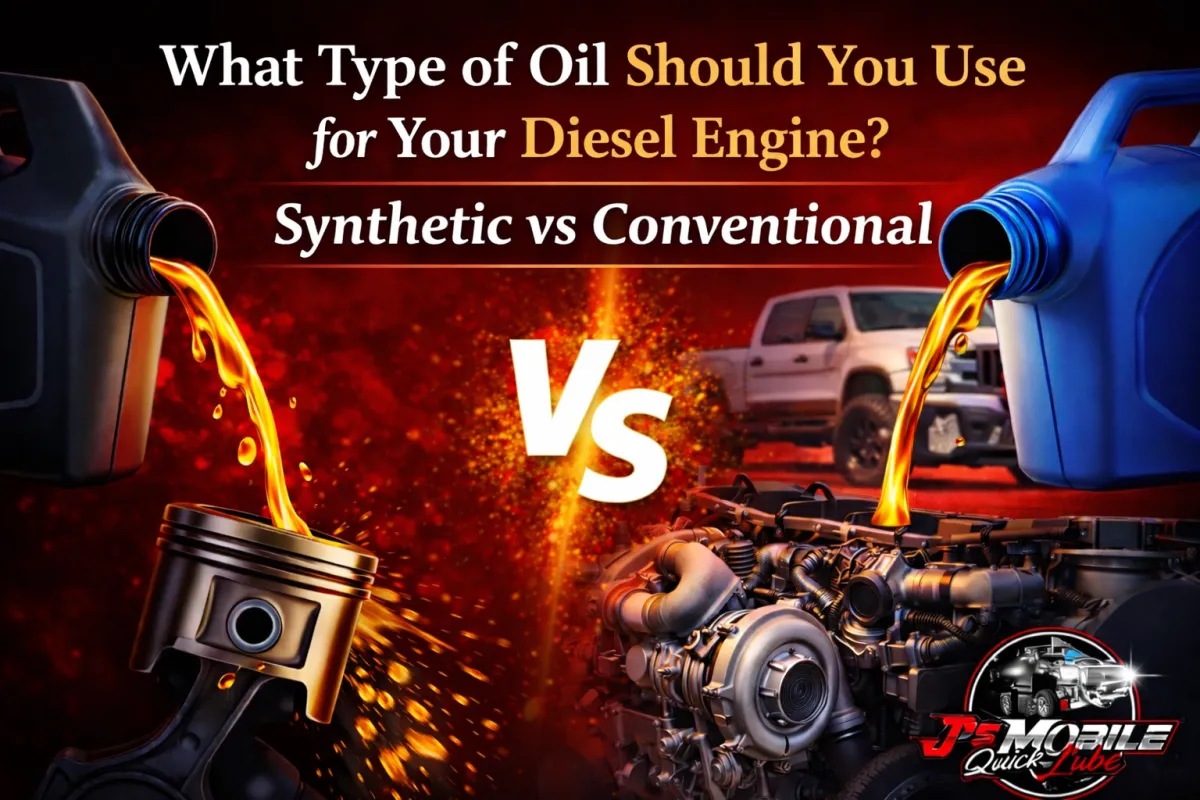
What Type of Oil Should You Use for Your Diesel Engine? Synthetic vs Conventional
Choosing the best oil for a diesel engine isn’t just about following manufacturer recommendations—it’s about protecting performance, extending engine life, and reducing long-term maintenance costs. With so many oil options available, one of the most common questions diesel owners ask is: synthetic vs conventional diesel oil—what’s the real difference?
At JS Mobile Quick Lube, we help diesel vehicle owners make informed maintenance decisions that keep their engines running strong, whether on the road, job site, or highway.
Why Diesel Engines Need the Right Oil
Diesel engines operate under higher compression, generate more heat, and produce more soot than gasoline engines. Because of this, diesel engine oil must:
Handle higher temperatures
Control soot and contaminants
Reduce wear on heavy-duty components
Maintain viscosity under extreme conditions
Using the wrong oil—or low-quality oil—can lead to accelerated engine wear, reduced fuel efficiency, and costly repairs.
Conventional Diesel Oil: The Basics
Conventional diesel oil is refined from crude oil and enhanced with additives to improve lubrication and engine protection.
Pros of Conventional Diesel Oil
Lower upfront cost
Widely available
Suitable for older diesel engines
Adequate for light-duty or low-mileage use
Cons of Conventional Diesel Oil
Breaks down faster under high heat
Less effective at cold starts
Requires more frequent oil changes
Provides less protection under heavy loads
Conventional oil can still be a solid option for older diesel engines or vehicles with minimal workload, but it may not be ideal for modern or high-performance diesel engines.
Synthetic Diesel Oil: Advanced Engine Protection
Synthetic diesel oil is chemically engineered for superior performance, offering enhanced protection in extreme conditions.
Pros of Synthetic Diesel Oil
Better resistance to heat and oxidation
Improved cold-weather performance
Superior soot control and cleanliness
Longer oil change intervals
Reduced engine wear over time
Cons of Synthetic Diesel Oil
Higher upfront cost
Not always necessary for lightly used engines
For modern diesel trucks, work vehicles, and high-mileage engines, synthetic oil is often considered the best oil for a diesel engine, especially when durability and performance matter.
Synthetic vs Conventional Diesel Oil: Which Is Better?
The right choice depends on how you use your diesel vehicle.
Driving ConditionsRecommended OilHeavy towing or haulingSyntheticHigh-mileage enginesSyntheticExtreme hot or cold climatesSyntheticOlder diesel enginesConventional or synthetic blendLight-duty, infrequent useConventional
Synthetic diesel oil typically provides better long-term value due to reduced wear and extended service intervals, even though it costs more upfront.
How JS Mobile Quick Lube Helps Diesel Owners
At JS Mobile Quick Lube, we don’t believe in one-size-fits-all oil changes. Our mobile service evaluates:
Engine type and age
Driving habits
Manufacturer oil specifications
Climate and workload conditions
We use high-quality diesel oils and professional-grade filters to ensure your engine gets the protection it deserves—without the hassle of visiting a shop.
Final Thoughts: Choosing the Best Oil for Your Diesel Engine
When comparing synthetic vs conventional diesel oil, synthetic often delivers superior protection, performance, and longevity—especially for modern diesel engines and demanding workloads. However, conventional oil can still serve a purpose in the right conditions.
If you’re unsure which oil is right for your diesel engine, JS Mobile Quick Lube is here to help. Our expert mobile technicians bring professional diesel oil service directly to you, saving time while protecting your investment.
Schedule your diesel oil change today and keep your engine running at peak performance.