


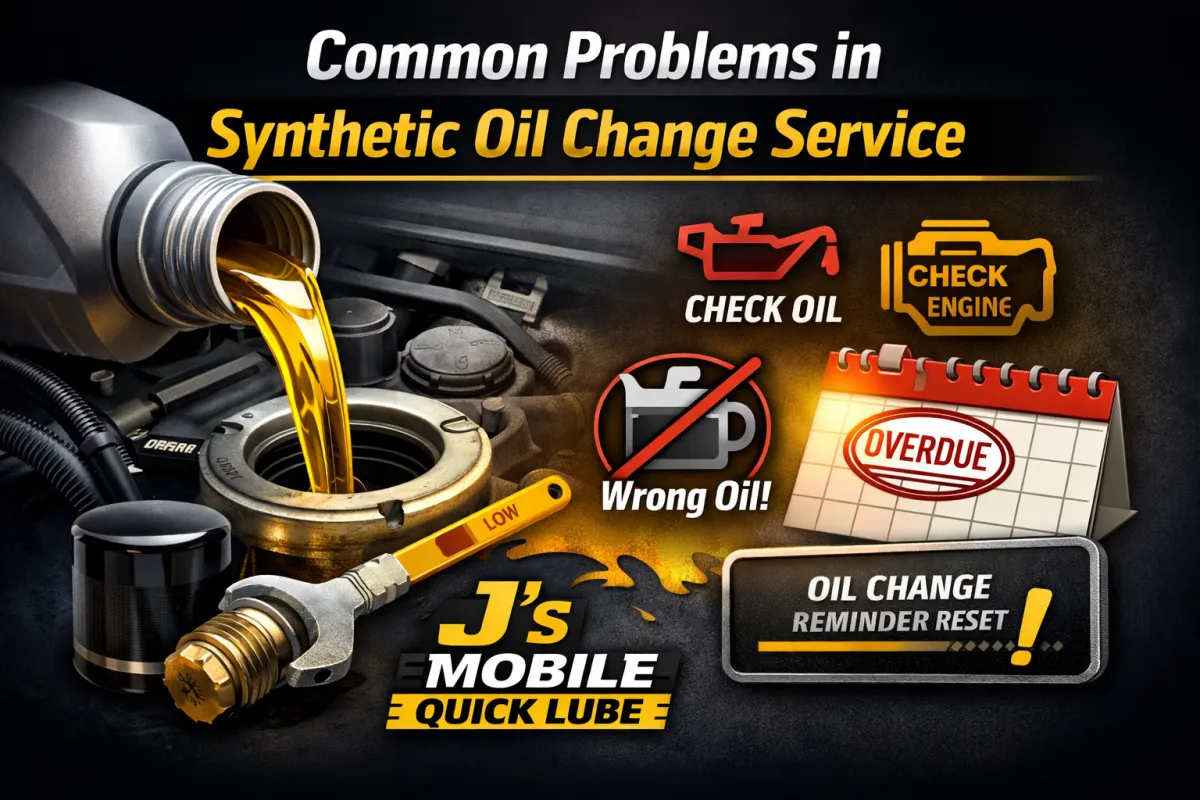
Common Problems in Synthetic Oil Change Service and How to Avoid Them
Common Problems in Synthetic Oil Change Service and How to Avoid Them
Primary Keyword: Common Problems in Synthetic Oil Change Service
Secondary Keyword: synthetic oil change mistakes
When it comes to protecting your engine, synthetic oil is one of the best investments you can make. It offers better performance, longer intervals between changes, and superior engine protection compared to conventional oil.
However, even with synthetic oil, problems can arise if the service isn’t done correctly. Many vehicle owners experience issues not because of the oil itself—but because of common synthetic oil change mistakes.
At J’s Mobile Quick Lube, we’ve seen it all. In this guide, we’ll break down the most common problems in synthetic oil change service and explain how to avoid them.
Why Synthetic Oil Requires Proper Service
Synthetic oil is engineered for high performance. It:
Resists breakdown at high temperatures
Flows better in cold weather
Reduces engine deposits
Extends engine life
But these benefits only work if the oil change is performed properly. Incorrect procedures can lead to leaks, engine wear, or even costly damage.
Common Problems in Synthetic Oil Change Service
1. Using the Wrong Type of Synthetic Oil
Not all synthetic oils are the same. There are:
Full synthetic
Synthetic blends
High-mileage synthetic
Manufacturer-specific formulas
Using the wrong viscosity or oil grade can reduce performance and damage engine components.
How to Avoid It:
Always follow your manufacturer’s recommended oil grade (for example, 0W-20 or 5W-30). At J’s Mobile Quick Lube, we verify your vehicle’s specifications before every service.
2. Overfilling or Underfilling the Engine
One of the most common synthetic oil change mistakes is incorrect oil levels.
Overfilling can cause pressure buildup and leaks.
Underfilling can lead to engine overheating and wear.
Both situations can cause serious engine damage over time.
How to Avoid It:
Always check the dipstick after filling and re-check after running the engine briefly. Proper measurement is critical.
3. Improper Oil Filter Installation
The oil filter plays a crucial role in keeping your engine clean. Problems happen when:
The wrong filter is used
The filter is not tightened properly
The old gasket is left behind (double gasket issue)
This can cause oil leaks or low oil pressure.
How to Avoid It:
Always replace the filter during a synthetic oil change and inspect the old gasket before installing the new one. Professional installation ensures the filter is properly sealed.
4. Not Resetting the Oil Life Monitoring System
Modern vehicles track oil life electronically. If the system isn’t reset after service, you may:
Get incorrect maintenance alerts
Miss your next service interval
This can lead to confusion and delayed maintenance.
How to Avoid It:
Always reset the oil life monitor after completing the oil change. This ensures accurate tracking moving forward.
5. Mixing Synthetic with Conventional Oil
While mixing won’t immediately destroy your engine, it reduces the performance benefits of full synthetic oil.
This mistake usually happens when:
The wrong oil is added during a top-off
The shop doesn’t fully drain old oil
How to Avoid It:
Ensure a complete drain before adding new synthetic oil. Work with a trusted service provider who uses the correct oil consistently.
6. Skipping Recommended Change Intervals
Many drivers believe synthetic oil lasts forever. While it does last longer than conventional oil, it still breaks down over time.
Ignoring change intervals can lead to:
Sludge buildup
Reduced fuel efficiency
Engine wear
How to Avoid It:
Follow manufacturer guidelines. Most synthetic oils last between 5,000 to 10,000 miles depending on the vehicle and driving conditions.
7. Drain Plug or Gasket Issues
Another common problem in synthetic oil change service is a damaged or improperly tightened drain plug.
This can cause:
Slow leaks
Stripped oil pan threads
Oil loss while driving
How to Avoid It:
Replace worn drain plug washers and tighten to manufacturer torque specifications. This prevents leaks and long-term damage.
Why Professional Service Matters
While DIY oil changes are possible, many synthetic oil change mistakes happen due to:
Lack of proper tools
Incorrect oil selection
Rushed service
Inexperience
At J’s Mobile Quick Lube, we eliminate these risks by providing professional, on-site oil change services that are fast, accurate, and convenient.
You don’t have to worry about:
Choosing the wrong oil
Improper installation
Messy cleanups
Long waits at repair shops
We bring expert service directly to your home or workplace.
Benefits of Choosing J’s Mobile Quick Lube
When you choose us, you get:
✔ Manufacturer-approved synthetic oil
✔ Correct oil grade for your vehicle
✔ Professional filter replacement
✔ Proper fluid level checks
✔ Oil life system reset
✔ Fast and convenient mobile service
Our goal is simple: protect your engine and save you time.
Final Thoughts
Synthetic oil is one of the best ways to extend your engine’s life—but only when serviced correctly.
Understanding the common problems in synthetic oil change service helps you avoid costly repairs and unnecessary engine wear. From improper oil levels to incorrect filters, even small mistakes can have serious consequences.
If you want peace of mind and professional service without leaving your driveway, trust J’s Mobile Quick Lube for your next synthetic oil change.
Ready for Your Next Synthetic Oil Change?
Avoid costly synthetic oil change mistakes and keep your engine running at peak performance.
📞 Contact J’s Mobile Quick Lube today to schedule your mobile synthetic oil change service.
Your engine deserves the best—and we bring it to you.