



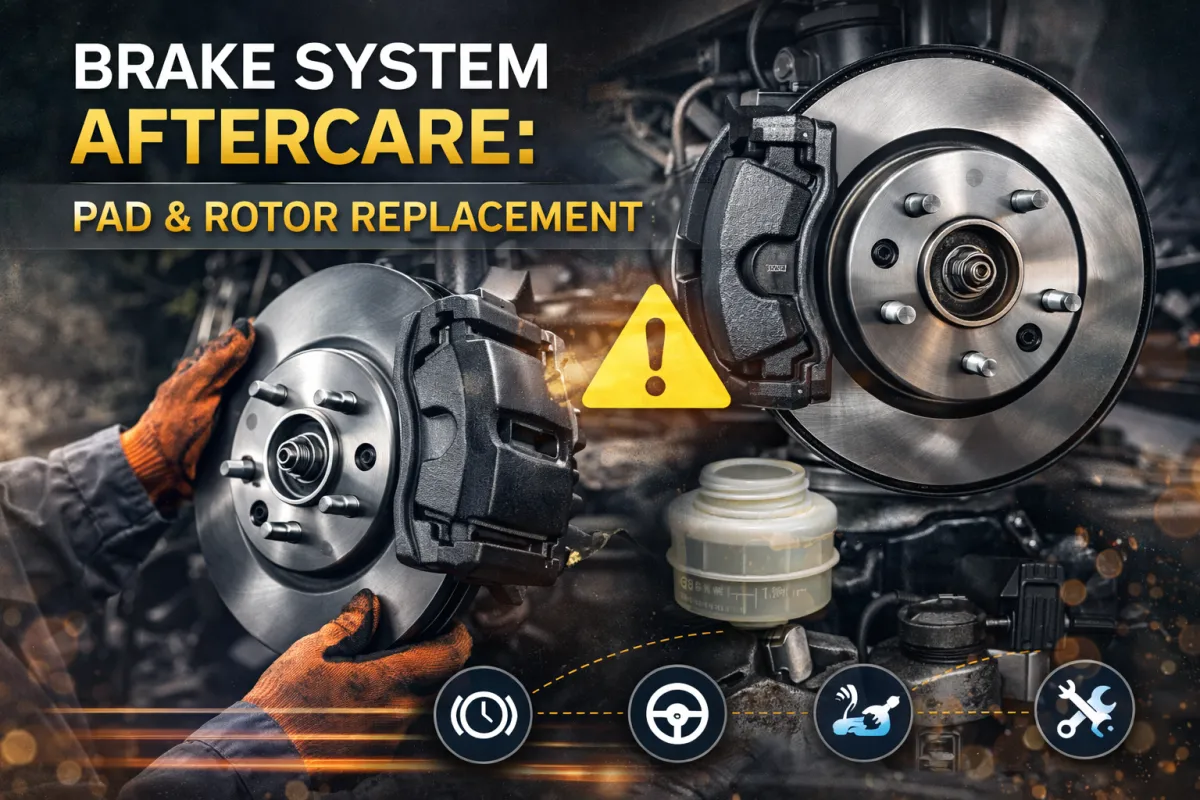
Brake System Aftercare: What Happens After a Pad & Rotor ReplacementWorking Right After Replacement
Brake System Aftercare: What Happens After a Pad & Rotor Replacement
Getting your brake pads and rotors replaced is a big step toward safer driving — but the job doesn’t end once the new parts are installed. Proper brake system aftercare is critical to ensure optimal performance, longevity, and safety.
At J’s Mobile Quick Lube, we believe informed drivers make safer drivers. Here’s what happens after a brake pad and rotor replacement — and what you should know to protect your investment.
Why Brake System Aftercare Matters
New brake components need time to properly seat and function together. Skipping proper aftercare can lead to:
Reduced braking performance
Noise or vibration
Uneven wear
Premature failure of new parts
Brake system aftercare ensures your brakes deliver consistent stopping power and last as long as they’re designed to.
The Brake Break-In (Bedding) Process
After a pad and rotor replacement, your brakes go through a bedding-in period. This process allows the brake pad material to evenly transfer onto the rotor surface.
What to Expect During Break-In
Slight smell from the brakes (normal)
Minor noise during early use
Gradually improving brake feel
Recommended Driving Tips
Avoid hard stops for the first 300–500 miles
Do not ride the brakes
Allow brakes to cool between stops
Follow manufacturer bedding procedures when provided
Proper bedding is one of the most important steps in brake system aftercare.
Brake Feel Changes Are Normal
Right after replacement, your brake pedal may feel:
Slightly softer
More sensitive
Different than before
This is normal as the system adjusts and hydraulic pressure stabilizes. If the pedal feels spongy or sinks to the floor, that’s not normal and should be inspected immediately.
Noise After Brake Replacement — Should You Worry?
Some noise during the first few days is common, including:
Light squeaking
Low grinding sounds
Occasional clicking
However, persistent or loud noises may indicate:
Improper installation
Hardware issues
Lack of lubrication
Rotor surface problems
Brake system aftercare includes monitoring these signs and addressing them early.
The Importance of Brake Fluid Checks
Brake service isn’t just about pads and rotors. Your brake fluid plays a major role in system performance.
After replacement, fluid should be:
At the correct level
Free of contamination
Clear or light amber in color
Old or moisture-contaminated brake fluid can reduce stopping power and damage components. A brake fluid inspection is an essential part of proper brake system aftercare.
Signs You Should Return for Inspection
Even with proper aftercare, it’s important to stay alert. Contact J’s Mobile Quick Lube if you notice:
Steering wheel vibration when braking
Pulling to one side
Burning smells
Dashboard brake warning lights
Continued noise after break-in
Catching issues early prevents costly repairs later.
How Long New Brakes Should Last
With proper brake system aftercare:
Brake pads typically last 30,000–70,000 miles
Rotors can last through multiple pad replacements
Driving habits, vehicle type, and road conditions all play a role — but proper aftercare dramatically improves lifespan.
How J’s Mobile Quick Lube Supports Brake System Aftercare
At J’s Mobile Quick Lube, our service doesn’t stop when the job is done. We provide:
Professional pad and rotor installation
Brake system inspections
Brake fluid checks
Clear aftercare guidance
Mobile service for convenience
We make sure your brakes don’t just work — they work right.
Drive Confidently With Proper Brake System Aftercare
Your brakes are one of the most important safety systems on your vehicle. Following the right brake system aftercare steps ensures reliable stopping power, quieter operation, and longer-lasting components.
If you’ve recently had a brake replacement or think your brakes need attention, J’s Mobile Quick Lube is ready to help.
👉 Schedule your mobile brake service today and drive with confidence.